NebGuides
How to Reduce Heat Stress in Dairy Cattle
Four ways to reduce heat stress and maintain production and fertility in dairy cattle.
NebGuide (G1582)How to Body Condition Score Dairy Animals
A routine program for body condition scoring can help detect potential health problems before they significantly reduce milk production. A herd of cattle in good body condition will produce more and will be less susceptible to metabolic disorders, disease, mastitis and reproductive problems.
NebGuide (G1583)Managing Dairy Cattle for Cow Comfort and Maximum Intake
Cow comfort can make a difference of several thousand pounds of rolling herd average milk production between two herds of similar genetics and rations. The successful producer will create a cow environment that minimizes stress, excessive competition for feed and water, and potential for injury. Facility design and herd management can enhance cow comfort and promote maximum feed intake.
NebGuides (G1660)Developing Dairy Heifer Rearing Expenses
Every successful dairy operation can account for most of the expenses that occur on the farm. But how many can actually cash flow each segment of the operation? How much does it cost to raise your dairy heifers or what percentage of your total expenses can be directly attributed to the milking herd? Few producers spend much time attempting to cash flow or estimate costs of the various parts of the dairy enterprise.
NebGuide (G1662)The Genetics and Management of Sound Feet and Legs in Dairy Animals
Sound management of feet and legs in dairy animals affects performance. This guide offers suggestions for good management practices.
NebGuide (1659)How to Maximize Income By Managing Days Dry
Most dairy producers are aware that an optimum calving interval is 365 days. This is a normal lactation length of 305 days with a dry period of 60 days. This interval is often looked at as a goal to strive toward rather than a goal that must be reached to maximize income from the sale of milk.
NebGuide (G1665)Resources
Calf Care and Handling Video Series
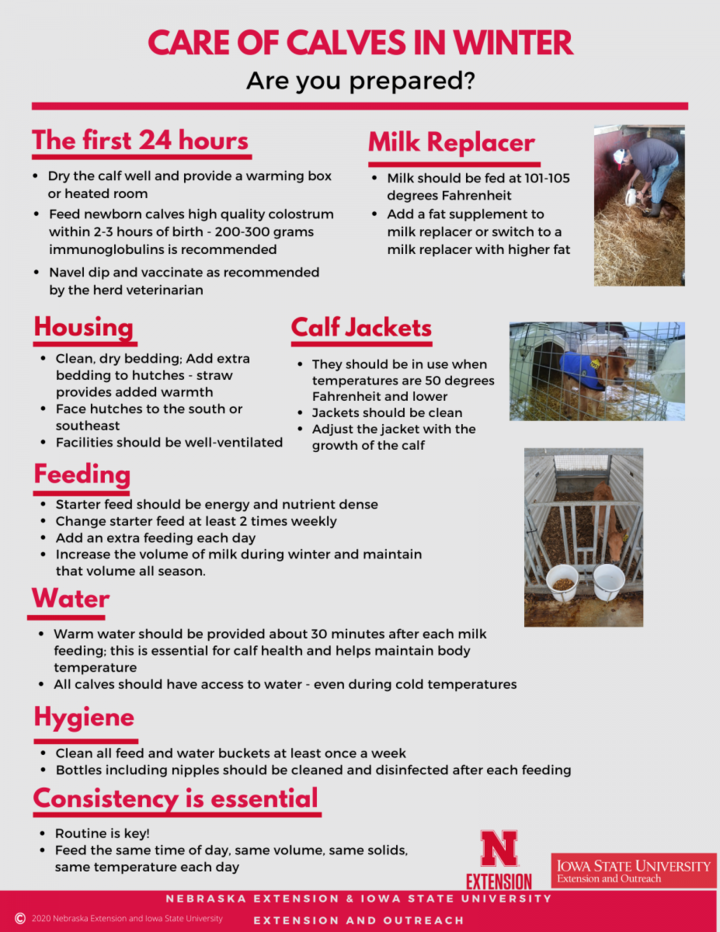
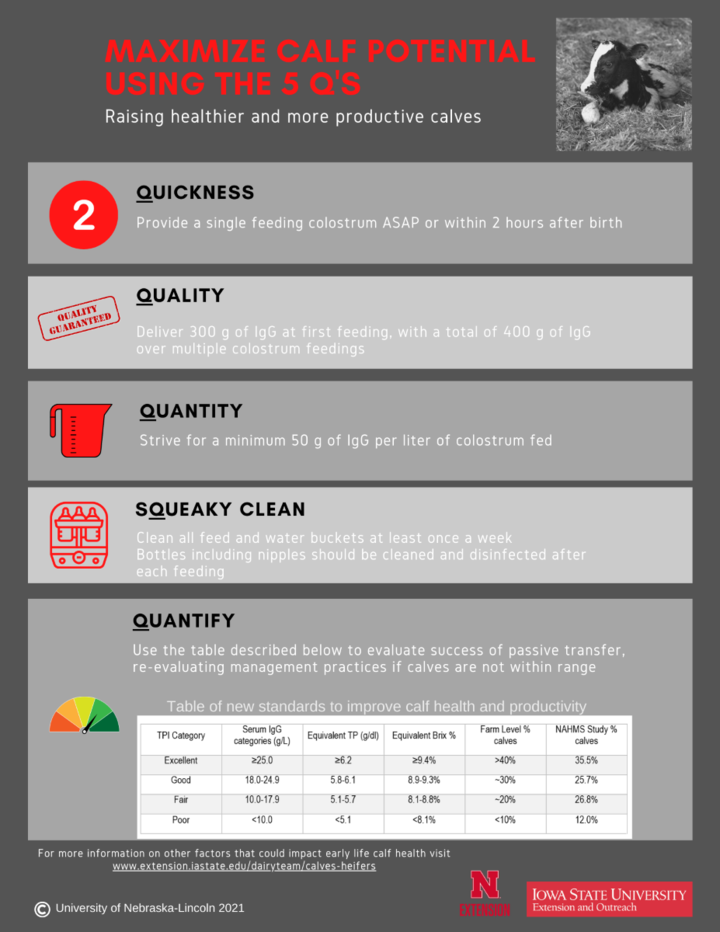
Having properly trained employees is critical for the health, growth and development of dairy calves and for the profitability and sustainability of a dairy farm. A new series of resources is available through Iowa State University Extension and Outreach and the University of Nebraska-Lincoln to provide training in calf management including; newborn calf care, colostrum management, animal handling, automatic calf feeder management and hygiene and sanitation. Each of the videos are less than 3 minutes in length, utilizing video demonstration of on farm practices to emphasize key calf management practices.
Infographics